Sleeping in on Saturday feels like a reward. By Sunday night, it can feel like your body is on the wrong schedule.
That weekly mismatch has a name: social jet lag. In research, it is usually described as the gap between your sleep timing on workdays and free days, often measured through the difference in mid-sleep between the two. A critical review of social jetlag and a broader review of social jetlag and health both describe it as a recurring mismatch between biological time and social time.
Why wake time matters
Your circadian rhythm works best when sleep happens at roughly the same times each day. The most important signal for setting that rhythm is light, and morning light tends to shift the clock earlier, while evening and nighttime light shift it later. That is why wake time matters so much in real life: it strongly shapes when your day starts and when your body gets one of its most powerful timing cues.
Research papers often quantify social jet lag with mid-sleep. But in daily life, Peaks uses wake time as the main signal because it is the more practical anchor and the stronger circadian driver for how people experience schedule shifts across the week. When weekends run later than weekdays, your body starts adapting to that later schedule. Then an early Monday can feel harder because your rhythm is being pulled in two directions.
How it can feel
Social jet lag does not mean something is wrong. It usually means your weekly rhythm is less stable than your body would like. People often notice harder Sunday-night wind-downs, more morning grogginess, less steady daytime energy and focus, and that odd out-of-sync feeling even after enough time in bed.
That pattern matters because your body cares not just about how much you sleep, but also when you sleep. A large prospective study of more than 60,000 people found that sleep regularity predicted mortality risk more strongly than sleep duration, which is one reason consistency has become such an important part of modern sleep research.
What helps most
The goal is not perfection. It is reducing the size of the weekly swing.
Keep your weekend wake-up time as close as you can to your weekday one. If you need more rest, it is usually better to go to bed a bit earlier than to sleep in much later. Get daylight soon after waking, and change your schedule gradually rather than all at once. Small improvements in consistency often do more for your rhythm than one perfect night.
How Peaks looks at it
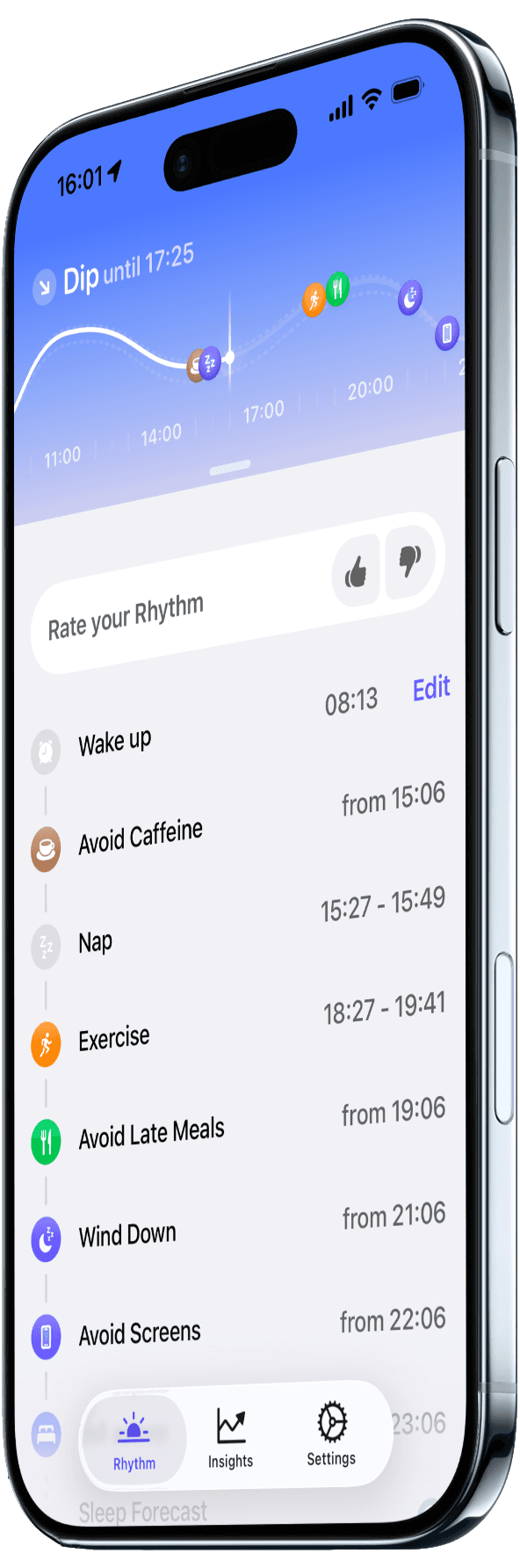
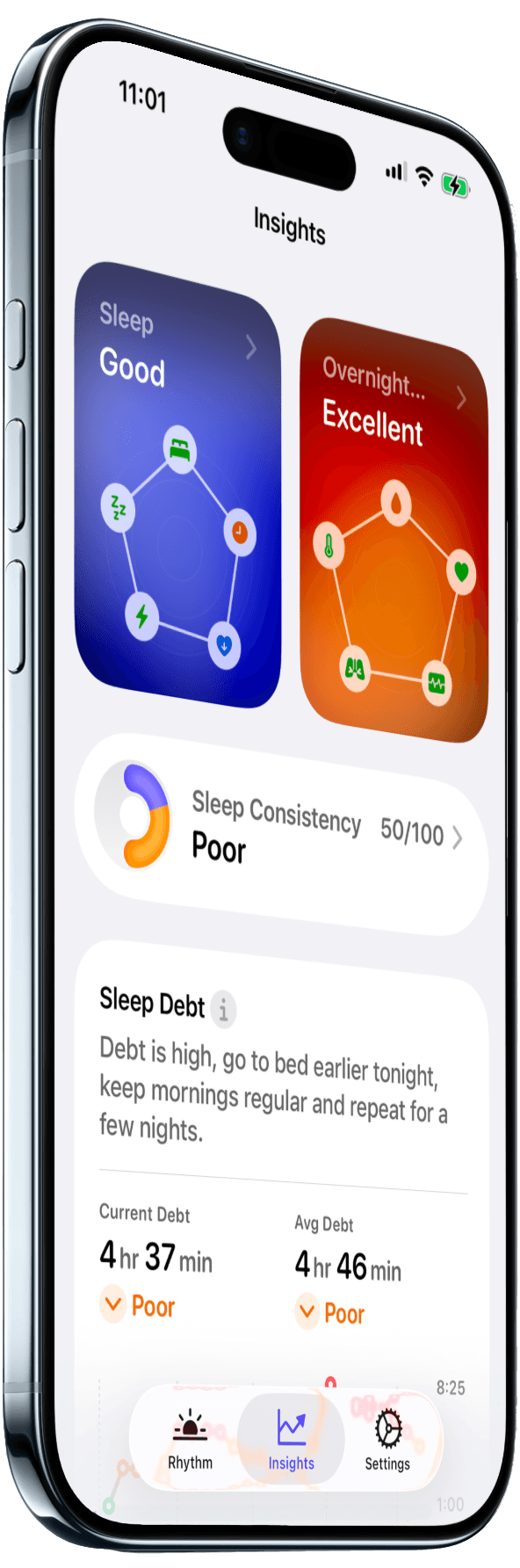
Peaks estimates social jet lag by comparing your recent weekday and weekend sleep timing, with wake time as the main signal. The smaller the gap, the steadier your rhythm usually is across the week.

What Your Flagged Vitals Mean
Heart rate elevated. Temperature flagged. Here's what your body is actually telling you.

What's Actually Happening While You Sleep
Your brain cycles through distinct stages every night, each with a specific job. Understanding them explains why some nights leave you restored and others don't.
4.7 1.100+ Reviews
Track Your Social Jet Lag
Peaks shows when your weekday and weekend wake times drift apart, so you can spot social jet lag before it turns into shakier energy, groggier mornings, and that out-of-sync Monday feeling.