Blog
Jan 8, 2026
What Actually Makes a Good Night's Sleep?
You've clocked your eight hours. So why do you still wake up exhausted? The answer isn't how long you slept, it's how well.

You went to bed on time. You slept for eight hours. And yet, when your alarm went off, you felt like you hadn't slept at all.
If this sounds familiar, you're not imagining things. Research shows that how long you sleep only tells part of the story. What really determines whether you wake up refreshed is sleep quality, and it's something most people never measure.
Hours in bed ≠ hours of good sleep
Here's the uncomfortable truth: spending eight hours in bed doesn't mean you got eight hours of restorative sleep.
Sleep efficiency (the percentage of time you're actually asleep while in bed) makes a significant difference. If you take 30 minutes to fall asleep, wake up twice during the night, and lie awake for another 20 minutes before getting up, your actual sleep might be closer to six and a half hours. Studies show that sleep efficiency below 80% is associated with meaningful health impacts, particularly increased mortality risk in older adults.
And that gap between time in bed and time asleep? It's more common than you'd think. According to the National Sleep Foundation, 27% of people take longer than 30 minutes to fall asleep on a typical night.
The four pillars of sleep quality
In 2017, the National Sleep Foundation convened a panel of sleep experts to answer a deceptively simple question: what actually makes sleep "good"?
After reviewing 277 scientific studies, the panel reached consensus on four key indicators that define quality sleep:
Sleep latency: how quickly you fall asleep. Falling asleep in under 30 minutes is considered healthy; taking longer may signal an issue.
Sleep efficiency: the ratio of time asleep to time in bed. Healthy adults should aim for 85% or higher.
Wake after sleep onset (WASO): how much time you spend awake after initially falling asleep. Less is better, with under 20 minutes being ideal for most adults.
Number of awakenings: how often you wake up during the night. Waking once or not at all indicates good continuity; frequent awakenings fragment your sleep.
Notice what's not on this list: total hours. Duration matters, but it's not the whole picture.
Why quality matters more than quantity
Your body doesn't just need sleep. It needs uninterrupted cycles of sleep. Each night, you move through multiple stages: light sleep, deep sleep, and REM sleep. Each stage serves a different purpose, from physical restoration to memory consolidation.
When your sleep is fragmented (even if you don't fully wake up) you miss out on these deeper, restorative phases. A study tracking college students found that sleep quality, duration, and consistency together accounted for nearly 25% of the variance in academic performance. And critically, there was no relationship between sleep on the single night before a test and test performance. What mattered was the pattern over weeks.
This helps explain the frustrating experience of sleeping "enough" and still feeling foggy. Your brain is responding to the quality of your sleep over time, not just last night's total.
The hidden factor: how you feel vs. what happened
Here's where it gets interesting. Research published in Scientific Reports found that while objective sleep metrics do predict how well people rate their sleep, the relationship is modest. People with similar sleep architecture can feel very differently about their rest.
This doesn't mean your subjective experience is wrong. It means it's influenced by factors beyond just sleep stages. Stress, expectations, and even your beliefs about sleep all play a role.
The practical takeaway: both objective data and subjective experience matter. Tracking your sleep gives you the full picture, including patterns you might miss if you're only going by how you feel.
What to do with this information
Understanding sleep quality shifts your focus from "did I sleep enough?" to "did I sleep well?" Here's how to start improving:
Protect your sleep efficiency. Only go to bed when you're actually sleepy. If you're lying awake for more than 20 minutes, get up and do something quiet until you feel tired again. This counterintuitive approach, borrowed from cognitive behavioral therapy for insomnia, helps your brain associate bed with sleep rather than wakefulness.
Keep a consistent schedule. Your body's internal clock thrives on regularity. Going to bed and waking up at similar times (even on weekends) improves sleep quality more than most people expect.
Minimize disruptions. Address the basics: a cool, dark room, limiting caffeine after early afternoon, avoiding screens in the hour before bed. Small changes compound.
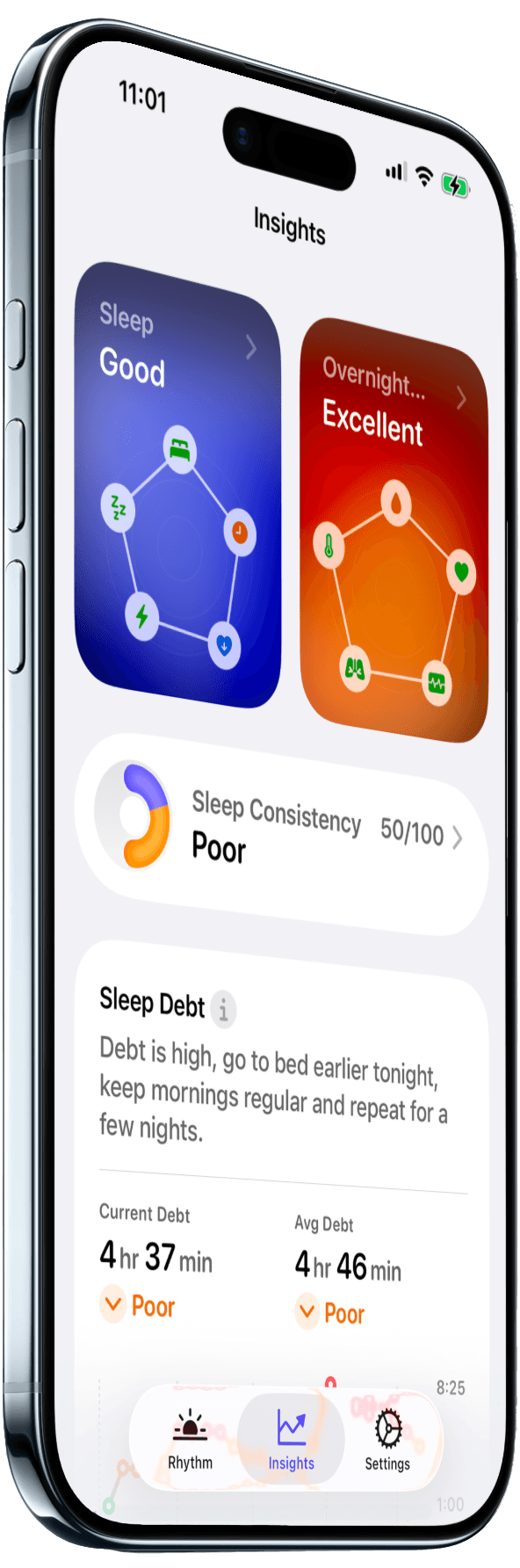
Track what matters. A sleep score that combines these quality metrics gives you something actionable: a way to see whether your habits are working without obsessing over individual nights.
The bottom line
Sleep quality isn't a vague concept. It's measurable, it's specific, and it matters more than the number of hours you log.
If you've been frustrated by waking up tired despite "getting enough sleep," the answer probably isn't sleeping longer. It's sleeping better, and understanding what that actually means.

What Is Social Jet Lag?
Why weekend sleep shifts can make Monday feel harder.

What Your Flagged Vitals Mean
Heart rate elevated. Temperature flagged. Here's what your body is actually telling you.
4.7 1.100+ Reviews
See your sleep quality, not just your hours
Peaks measures what actually matters, so you know if last night's sleep worked.